
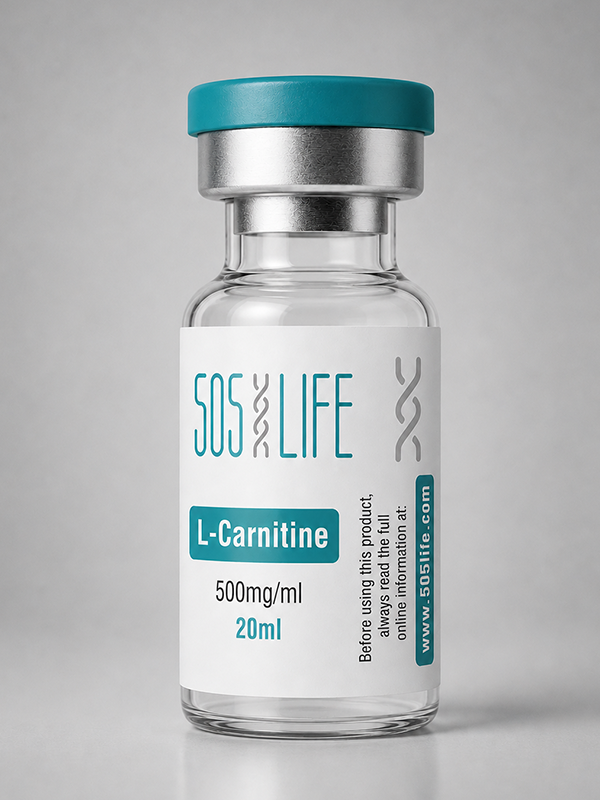
Research compound
L-carnitine 500 mg/ml - 20 ml
Price
60,00 CHF
L-Carnitine 500 mg/ml research-grade solution in a 20 ml glass bottle. Widely studied in laboratory models of mitochondrial fatty-acid transport, beta-oxidation and cellular energy metabolism.
✓Third party tested
✓High purity and quality
✓Research use only
Research use only: this product is intended exclusively for laboratory, analytical or collector purposes. It is not intended for human or veterinary use, food use, dietary supplementation, cosmetic use or as a medicine.
L-Carnitine 500 mg/ml research-grade solution in a 20 ml glass bottle. Widely studied in laboratory models of mitochondrial fatty-acid transport, beta-oxidation and cellular energy metabolism.
Research Use Only: All products are intended exclusively for laboratory and scientific research. Not for human or veterinary use.
Purity
High purity (HPLC, third-party tested)
Form
Solution
Content
500 mg L-Carnitine per 1 ml
Packaging
20 ml glass bottle with sterile closure
Storage
2-8 °C, protect from light
Molecular Formula
C7H15NO3
Molecular Weight
161.1989 g·mol⁻¹
IUPAC Name
(3R)-3-hydroxy-4-(trimethylazaniumyl)butanoate
CAS Number
541-15-1
Research Overview
L-Carnitine (levocarnitine) is a vitamin-like quaternary ammonium compound derived from lysine and methionine. In laboratory settings it is frequently used as a model compound for studying mitochondrial energy production, particularly the transport of long-chain fatty acids into the mitochondrial matrix for β-oxidation and ATP generation.
Primary Research Areas
- Fat metabolism & beta-oxidation: frequently used in models investigating long-chain fatty-acid transport, mitochondrial lipid oxidation and metabolic regulation.
- Exercise performance models: investigated in protocols focusing on VO2 dynamics, endurance capacity, muscle-glycogen sparing and energy efficiency.
- Recovery & oxidative stress: used in studies evaluating markers of muscle damage, lactate accumulation and mitochondrial resilience after high-demand conditions.
- Cardiac & neuronal energy: studied in high-energy-demand tissues such as heart and brain, with focus on cellular energy support and mitochondrial function.
Powered by Phoca Cart
