
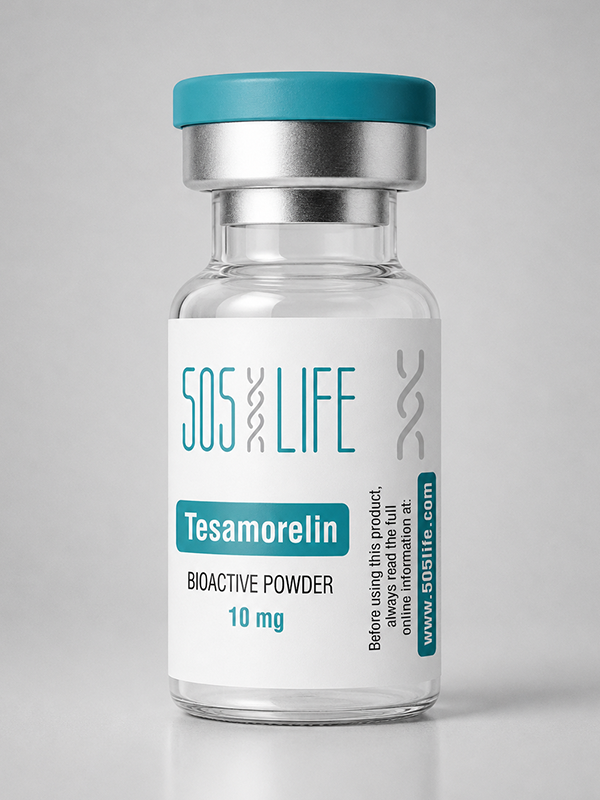
Tesamorelin 10mg
Tesamorelin 10 mg
research-grade
lyophilized peptide powder
in a glass vial. Tesamorelin (also known as TH9507) is a synthetic analog of human Growth Hormone-Releasing Hormone (GHRH), studied in experimental models of GH/IGF-1 axis modulation, visceral adiposity, lipodystrophy-like states and metabolic regulation.
Tesamorelin 10 mg
research-grade
lyophilized peptide powder
in a glass vial. Tesamorelin (also known as TH9507) is a synthetic analog of human Growth Hormone-Releasing Hormone (GHRH), studied in experimental models of GH/IGF-1 axis modulation, visceral adiposity, lipodystrophy-like states and metabolic regulation.
All products are intended exclusively for laboratory and scientific research. Not for human or veterinary use.
Research Overview
Tesamorelin (TH9507) is a synthetic peptide analog of human Growth Hormone-Releasing Hormone (GHRH) comprising the full 44-amino acid sequence of hGHRH with an N-terminal trans-3-hexenoyl modification that enhances stability and resistance to enzymatic degradation. In experimental systems, Tesamorelin is used as a tool compound to investigate regulation of the GH/IGF-1 axis, visceral adipose tissue dynamics, lipodystrophy-like phenotypes and broader metabolic and neuroendocrine pathways in vitro and in vivo research models.
Primary Research Areas
- GH/IGF-1 axis and pituitary signaling:
Used in experimental models to study how GHRH analog stimulation influences pituitary growth hormone release, circulating IGF-1 levels and downstream anabolic and metabolic signaling cascades. - Visceral adipose tissue and lipodystrophy models:
Applied in preclinical research exploring alterations in visceral fat depots, abnormal fat distribution and associated metabolic parameters in lipodystrophy-like experimental paradigms. - Metabolic regulation and glucose–lipid interactions:
Employed to probe relationships between GH/IGF-1 signaling, glucose handling, lipid metabolism and insulin sensitivity in diverse metabolic research models. - Body composition and tissue remodeling:
Used in studies of lean mass, fat mass and tissue remodeling to characterize how chronic modulation of the GHRH–GH–IGF-1 axis impacts body composition in experimental systems. - Neuroendocrine and cognitive research:
Investigated in models assessing hypothalamic–pituitary regulation, neuroendocrine feedback loops and potential cognitive or brain-structure–related endpoints in aging or metabolic-stress paradigms.
